
The power of the cave
Stone and water, a story of origins
Andreina Acri
7/27/20264 min read
READ BELOW ENGLISH-ITALIANO
The Cave in 2200 BC
In 2200 BC, humanity was at a time of great transition: the early Bronze Age was beginning in Europe and the Mediterranean basin. Our ancestors were no longer the "cavemen" of the Paleolithic; they now lived in organized villages, practiced agriculture, animal husbandry, and mastered metallurgy. Yet caves continued to be used intensively, but for radically different purposes than in the past. Around 2200 BC, the ritual use of caves reached extraordinary complexity. For Bronze Age communities, entering a cave was not a random choice or simply linked to the need for shelter, but a true religious act.
The cave was seen as a natural sanctuary, a physical and spiritual threshold suspended between the visible world of the living and the invisible world of the subterranean (chthonic) deities and ancestors.
The Sacred Cave: The Atrium vs. the Depths
The architecture of the cave dictated the structure of the ritual, generally divided into two areas:
The Atrium (the area of light): This was the space open to the public and the community. Here, banquets, sacrifices visible to all, and the preparation of rituals took place.
The Dark Tunnels (the heart of the sanctuary): Only priests, shamans, or initiates could enter the deepest and darkest tunnels, where silence was absolute. There, isolated from the world and deprived of sunlight, the most secret rites, divinations, and direct contact with the forces of the afterlife took place.
The cave sanctuaries of this period shared certain specific practices. One of the cults was:
The cult of "magical" water
One of the main reasons a cave became a sanctuary was the presence of water: underground springs, ponds, or the simple, continuous dripping of stalactites.
The water that gushed from the depths of the earth was considered sacred, healing, and life-giving.
The faithful collected this water in decorated ceramic vases or, conversely, threw offerings into the underground waters to please the spirits of the earth.
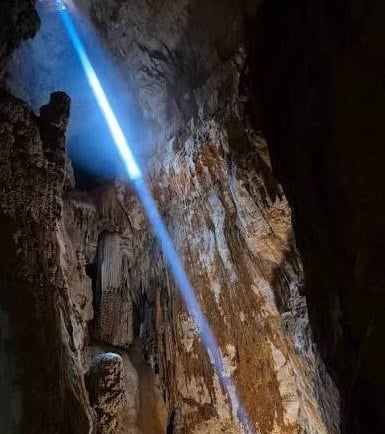
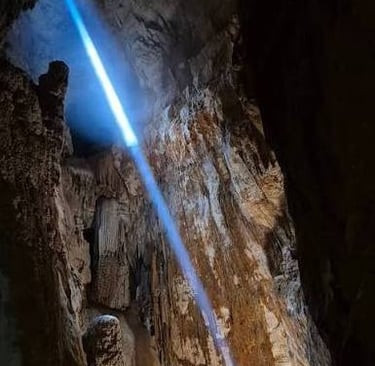
Beyond the threshold of the visible world, the cave opens up for us, the tribe of Follemente Insieme, like the secret womb of the Earth, a temple of rock and silence where time suspends its march.
We have called it "Mother Stone Cave," and there we will dance, sing, and transform.
It is the realm of fertile shadow, an invitation to descend into the depths of the soul to return to the essence.
But precisely there, where the stone becomes the guardian of the depths, wonder arises: a natural pool stretches out like a liquid mirror, right before the cave. In this basin of pure transparency, the light of the sky dances with the darkness of the rock, merging the high and the low in an eternal embrace. The clear water thus becomes the threshold of a rebirth, a baptism into the spirituality of nature: an invitation to bathe and purify the gaze, allowing the reflection of the surface to reveal the truth hidden deep within the heart.
La grotta nel 2200 a.C.
Nel 2200 a.C. l'umanità si trovava in un momento di grande transizione: in Europa e nel bacino del Mediterraneo stava iniziando la prima Età del Bronzo. I nostri antenati non erano più i "cavernicoli" del Paleolitico; vivevano ormai in villaggi organizzati, praticavano l'agricoltura, l'allevamento e dominavano la metallurgia. Eppure, le grotte continuavano a essere usate intensamente, ma con scopi radicalmente diversi rispetto al passato. Intorno al 2200 a.C., l'uso rituale delle grotte raggiunge una complessità straordinaria. Per le comunità dell'Età del Bronzo, entrare in una grotta non era una scelta casuale o legata solo al bisogno di un riparo, ma un vero e proprio atto religioso.
La grotta era vista come un santuario naturale, una soglia fisica e spirituale sospesa tra il mondo visibile dei vivi e il mondo invisibile delle divinità sotterranee (ctonìe) e degli antenati.
La grotta sacra: l'Atrio vs le Profondità
L'architettura della grotta dettava la struttura del rito, divisa generalmente in due zone:
L'Atrio (la zona di luce): Era lo spazio aperto al pubblico e alla comunità. Qui si svolgevano i banchetti, i sacrifici visibili a tutti e la preparazione dei rituali.
I cunicoli oscuri (il cuore del santuario): Solo i sacerdoti, gli sciamani o gli iniziandi potevano addentrarsi nelle gallerie più profonde e buie, dove il silenzio era assoluto. Lì, isolati dal mondo e privati della luce solare, si consumavano i riti più segreti, le divinazioni e i contatti diretti con le forze dell'oltretomba.
I santuari in grotta di questo periodo condividevano alcune pratiche precise. Uno dei culti era:
Il culto dell'acqua "magica"
Uno dei motivi principali per cui una grotta diventava un santuario era la presenza di acqua: sorgenti sotterranee, laghetti o il semplice e continuo gocciolio delle stalattiti.
L'acqua che scaturiva dalle profondità della terra era considerata sacra, curativa e datrice di vita.
I fedeli raccoglievano quest'acqua in vasi di ceramica decorati o, al contrario, lanciavano nelle acque sotterranee offerte per compiacere gli spiriti della terra.
Oltre la soglia del mondo visibile, la grotta si spalanca per noi tribu di Follemente Insieme come il grembo segreto della Terra, un tempio di roccia e silenzio dove il tempo sospende il suo cammino.
L'abbiamo chiamata "Grotta Madre Pietra" e lì danzeremo, canteremo, ci trasformeremo.
È il regno dell'ombra feconda, un invito a scendere nelle profondità dell'anima per ritornare all'essenza. Ma proprio lì, dove la pietra si fa custode del profondo, nasce lo stupore: una piscina naturale si stende come uno specchio liquido, proprio dinanzi all'antro. In questa conca di pura trasparenza, la luce del cielo danza con l'oscurità della roccia, fondendo l'alto e il basso in un abbraccio eterno. L'acqua limpida diventa così la soglia di una rinascita, un battesimo nella spiritualità della natura: un invito a bagnarsi per purificare lo sguardo, lasciando che il riflesso della superficie riveli la verità nascosta nel profondo del cuore.